Friday, August 20, 2021

My latest, on the peril of indefinite loose monetary policy.

https://www.livemint.com/opinion/columns/the-dangers-of-continuing-with-unconventional-money-policies-11629446447654.html

Are “unconventional” monetary policies (UMPs) deployed by the advanced economies a cure worse than the disease? Your columnist has asked this question on numerous occasions in recent years, as it becomes increasingly evident that the harmful side effects of UMPs, which helped alleviate the worst symptoms of the global financial crisis, are increasingly distorting not only the financial sector but the real economy as well, and causing serious and harmful “spillover” effects on emerging economies such as India.


Raghuram Rajan, former governor of the Reserve Bank of India, has been a well-known critic of UMPs, and, in particular, the damaging effects of the “taper tantrum” of 2013, in which then Federal Reserve Board chair, Ben Bernanke, had to walk back from plans to taper the large scale asset purchases — commonly called “quantitative easing” — after his remarks that they would begin to taper, touched off a firestorm in international financial markets, and hit emerging economies, including India, especially hard.


Recently, Rajan penned a column (“The Dangers of Endless Quantitative Easing”, Project Syndicate, 2 August), in which he weighed in on the current debate occurring amongst members of the Fed as well as academic and bank and corporate economists on whether it is now high time for the Fed to taper its asset purchases, at present $120 billion per month. Rajan’s view is that supply constraints are now more pertinent than insufficient demand, and excessively accommodative monetary policy runs the risk of stoking inflation, which would have fiscal implications in the medium to longer rum, increasing the servicing costs on the large stock of government debt due to interest rates that will eventually have to go up as inflation begins to spike.


On 18 August, speaking to the Financial Times (“Top Fed official warns massive bond purchases are ill-suited for US economy”), Eric Rosengren, president of the Boston Fed, threw his weight behind the Fed board beginning to taper after it meets next month, with the aim of winding down asset purchases altogether by the middle of next year, again citing supply constraints, such as the difficulty employers in the US are encountering finding workers, even as they offer higher wages. Importantly, Rosengren pointed to the harmful effects of asset price appreciation and “undue leverage”, as fund managers take on more and excessive risks in the search for yield in a low-interest environment.


Ironically, asset price bubbles fuelled by leverage and low interest rates were the proximate cause of the global financial crisis to begin with, and they are in play once again as a serious side effect of low interest rates and asset purchases used to combat the effects of the crisis. This is a little like someone suffering insomnia, who then gets hooked on sleeping pills, and is unable to taper them and ends up taking them for life. Unless the US, and other advanced economies, begin to take seriously the need to pull back from UMPs, this is the situation we may end up in.


It is worth reminding ourselves that debates about monetary policy are not merely an esoteric pastime for central bankers and finance gurus. Rather, excessively loose monetary policy has long-lasting and perverse effects on the real economy, too. One of the most damaging of these side effects is the increase in wealth and income inequality that has been abetted by low interest rates and asset price inflation.


It is, after all, the already wealthy who have money to invest, and skyrocketing asset prices, everything from property to antique automobiles, boosts their wealth and income. By contrast, lower income households put their money in the bank, where they earn low, almost zero, interest rates that barely keep pace with inflation.


There is more than a little bit of irony in the fact that loose monetary policy, which has received widespread support from left-leaning economists in the US, actually has done more to worsen inequality than the effects, say, of former President Donald Trump’s tax cuts, which were widely criticized for being pro-rich. A recent study, reported on by Bloomberg (“U.S. Wealth Gap Rises With Jackson Hole Coming at the Top”, 18 August), documents widening wealth gaps between the top and bottom deciles of US counties. Looking at income from assets, in particular, interest, dividends, and rents, on a per capita basis, the top 10 percent of counties earned about $20,000 in asset income per person, on average. Meanwhile, in the bottom 10% of counties, that figure was only about $7,500. This has very little to do with the structure of taxation and very much to do with the distorting effects of low interest rates and frothy asset prices.


There are also more conventional dangers that lurk, unless the Fed and other advanced economy central banks get serious about winding down asset purchases and returning policy interest rates to more normal territory and away from near zero. During the “great moderation”, a long period of low inflation that preceded the financial crisis, there was a smug insouciance amongst central bankers and even academic economists that high inflation was a thing of the past. But with inflation now starting to tick up in the US and elsewhere, that smugness may soon evaporate, as Fed officials realize that it is far from easy to put the inflation genie back in the bottle, once it has been uncorked.


Tuesday, August 10, 2021

My next Mint column on the pandemic at an inflection point. The on-line version is unavailable due to a technical glitch. The text as filed is placed below.

https://www.livemint.com/opinion/the-pandemic-at-an-inflexion-point-calls-for-extra-care-11628441268697.html


The pandemic at an inflection point calls for extra care


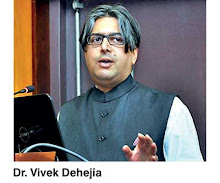
Vivek Dehejia


Fully a year and a half into the COVID19 global pandemic, the world appears to be at an inflection point in the management of the virus, and a clear divide is emerging between advanced and emerging countries. Last time, your columnist discussed the pros and cons of the United Kingdom’s re-opening plan, with the penultimate stage of unlocking on 19 July — dubbed “Freedom Day” by the British tabloids — while cases were still on the rise, driven by the Delta variant.


As I noted then (“Boris Johnson is taking a big gamble with ‘Freedom Day’”, 26 July), Prime Minister Boris Johnson was taking a big gamble on re-opening under such circumstances. The gamble appears to have paid off. After coming to a crest, new infections have begun to taper off, and serious illness, hospitalization, and morality remain far below the levels of earlier waves of the pandemic, which preceded widespread vaccination. If things go according to script, the UK is poised to remove removing pandemic-era restrictions later this month.


By contrast, in the United States, a clear divide has emerged between the “Red” (Republican) and “Blue” (Democratic) states — the former have relatively low levels of vaccination compared to the latter — not due to any supply constraints — the US is awash in vaccines — but due to vaccine hesitancy, which is much higher amongst Republicans, especially supporters of former President Donald Trump. While Blue states, such as New York, press ahead with re-opening, while maintaining some pandemic-era restrictions, such as social distancing and mask mandates, Red states are seeing a surge in new infections even as many, such as Florida, have eliminated all pandemic-related restrictions. Florida’s governor, Ron DeSantis, has gone so far as to ban local jurisdictions from re-imposing mask mandates, which the state has eliminated.


Meanwhile, Canada, the other major Anglo-American country in the Western hemisphere, has taken something of a middle path. With high rates of vaccination, most Canadian provinces are on a re-opening path, albeit at different speeds. Thus, while Ontario, the largest province, retains a mask mandate in indoor spaces, other provinces, such as Alberta, have eliminated it. Absent a major new Delta-driven outbreak, which cannot be ruled out, Canada as a whole appears to be on track for a return to normalcy, more or less, by later this autumn or early winter.


Variations of this pattern may be observed in other advanced Western countries, such as in Europe, all of which have now attained relatively high rates of vaccination, and most of whom are now well on a re-opening path. This summer has seen the return of major music festivals, such as the Salzburg Festival in Austria, with relatively few restrictions. Indeed, the festival had even dispensed with mandatory mask use inside the concert and theatre venues, until a fully vaccinated ticket holder tested positive. The mask mandate was hastily re-introduced, but few other restrictions remain. A short distance across the border in the German state of Bavaria, the Bayreuth Festival, devoted to the music of the 19th century composer Richard Wagner, is also back in full swing. Intra-European travel has also, just about, returned to normal, and foreign tourists have also returned.


The story, however, is very different in most of the emerging and developing world, where rates of vaccination, even of first doses, remain low, with full vaccination percentages often in the single digits. These countries, spanning the world from Latin America to Africa and Asia, remain acutely vulnerable to outbreaks of the virus, especially the virulent and highly transmissible Delta variant. Recent weeks have seen major outbreaks across Southeast Asia somewhat reminiscent of the devastating second wave that India experienced earlier this year.


The world now stands on the cusp of a two-speed recovery — both from the pandemic and of the economy — driven by differential vaccination rates in the rich as compared to the poor countries. This has fuelled cries for “global vaccine equity”, and even the World Health Organisation (WHO) has thrown its weight behind the idea. Recently, the WHO called for a pause on “booster” doses being planned in several rich countries, arguing that the need of the hour is to ramp up vaccination rates in the developing world. It is indeed a tragedy that, as rich countries such as the US and Canada sit on vast stockpiles of vaccines, many of which are sure to expire unused, there are millions of people in poorer countries still awaiting a second, or in many cases, even a first jab.


The major international financial organisations, such as the World Bank and the International Monetary Fund, as well as banks, investment houses, and management consultancies, have also lent their weight to the argument, as report after report show that ongoing pandemic-related restrictions in many developing countries will be a drag on the global economic recovery.


The implicit argument, although it is rarely stated directly, is that it is in the enlightened self-interest of the rich world to ensure that poorer parts of the world quickly get up to speed on vaccination, else the consequences will be dire for the rich world itself. Not only will the incipient global economic recovery stall, but denizens of the rich countries will be at risk from infection through successive putative new variants of the COVID19 virus against which the vaccines currently in use will presumably be less effective.


Much is at stake as the world stands at this inflection point.


Vivek Dehejia is an associate professor of economics and philosophy at Carleton University in Ottawa, Canada.


Sunday, July 25, 2021

Boris Johnson is taking a big gamble with ‘Freedom Day’ -- my latest Mint column

 https://www.livemint.com/opinion/columns/boris-johnson-is-taking-a-big-gamble-with-freedom-day-11627046280929.html

With their usual flourish, British tabloids dubbed 19 July as “Freedom Day”, or, more prosaically, the day that the United Kingdom entered stage four of its re-opening plan. This was the day, delayed by four weeks, on which most remaining COVID19 pandemic-related restrictions were lifted in the UK. Some restrictions remain, such as the need for workers to self-isolate if they are pinged by the official contact testing and tracing app, and local bodies continue to impose their own restrictions — such as mandating mask use on the London Underground. But, in the main, most pandemic-era restrictions are gone: mask use is now voluntary, not compulsory (except where otherwise mandated), social distancing (already honoured in the breach rather than the observance for the past many weeks) is a thing of the past, and capacity limits have been lifted at restaurants, concert halls, theatres, and other public places.


There is much that can be criticized in British Prime Minister Boris Johnson’s handling of the pandemic, and there has been much criticism by epidemiologists and other experts of the decision to go ahead with a full re-opening, in the face of sharply rising infections, and, even more worryingly, upticks in hospitalization and deaths, due, in large part, to the ubiquity of the delta variant, which is highly transmissible and has greater immune-escaping properties than the conventional COVID19 virus — meaning that it is possible for those already fully vaccinated to become infected. Additionally, while the full vaccination rate in the UK is about 50 percent, those under 18 have not been vaccinated. Anecdotal evidence, too, suggests that, despite almost half of all Britons now vaccinated, some parts of British inner cities, including London, have vaccination rates less than 30 percent. All of this spells potential trouble.


In light of this, it is striking that in a video message shared on 18 July via Twitter https://twitter.com/BorisJohnson/status/1416764592043315204?s=20 , UK Prime Minister Boris Johnson offered this rationale for the re-opening, in the form of a rhetorical question: “If we don’t do it now, we’ve got to ask ourselves, when will we do it?” As he also remarked, due to the high vaccination rate (but recall the caveats I noted above), new infections have now largely been decoupled from new hospitalizations and increased mortality. A similar logic has underpinned the elimination of pandemic-era restrictions in a number of states of the United States — mostly the “Red” rather than “Blue” states, that is, those with Republican rather than Democratic governments — and the same underlies the sentiment increasingly heard from political conservatives in the Anglo-American sphere, that, post-vaccination, COVID19 should be seen as another, albeit an especially, nasty flu, and cannot be the basis for lockdowns and restrictions without end.


As your columnist has noted on previous occasions, lockdowns and other restrictions intended to flatten the curve of COVID19 infections pose a difficulty very similar to that posed by the deployment of unconventional monetary policies, most notably “quantitative easing” (QE) after the global financial crisis: how and when does one exit? Just as the unwinding of QE was repeatedly delayed in the US and other countries, and then put into reverse by the onset of the global COVID19 pandemic, exit from lockdowns and restrictions have either been open-ended or continually extended in most advanced Western countries.


The difficulty in finding the correct time to exit from restrictions and re-open the economy is, at one level, a matter of the trade-offs between the economic, psychic, and other benefits of earlier re-opening being weighed against the costs of increased infections, hospitalizations, and deaths, similarly due to re-opening, and as predicted by all of the standard “agent-based” epidemiological models (although the deficiency of these class of models, in ignoring behavioural responses by the public, have also been noted by your columnist).


But, this is not the whole story. An additional rationale for prudence comes from political economy considerations. I would hypothesize that, other things equal, if an earlier re-opening goes well, the public is likely, at best, to look perhaps a little more favourably on the incumbent politician who went ahead with it. On the other hand, if things go badly, the incumbent is likely to be severely blamed by the public for a premature re-opening.


This crucial asymmetry in the “payoff matrix” (in the jargon of game theory) to the incumbent politician between the two scenarios will naturally induce caution, likely greater than would be warranted on the basis of a scientific benefit-cost analysis alone. In simpler terms, re-opening earlier with things going well may give a little fillip to the incumbent, but will not guarantee re-election, while things going badly will almost certainly spell disaster at the polls. It is, thus, much safer for a prudent politician, with an eye on the next elections, to be excessively cautious and delay re-opening beyond what would be necessary from the point of view of what is good for society.


A perfect example of this is the continuation of lockdowns and other restrictions in Canada, the caution of whose political leaders contrast sharply with the UK; striking, given the similar full vaccination rates in both countries. There is no doubt that Johnson is taking a big gamble with Freedom Day — you can be sure political leaders the world over will be watching with great interest.


Vivek Dehejia is associate professor of economics and philosophy at Carleton University in Ottawa, Canada.

Sunday, July 11, 2021

My take on Modi's cabinet reshuffle.

https://www.livemint.com/opinion/columns/modis-cabinet-reshuffle-isn-t-as-peculiar-as-it-is-made-out-to-be-11626008735211.html

AS THE ARTICLE MAY BE PAYWALLED, THE TEXT OF THE ARTICLE, AS FILED, IS PLACED BELOW.

Speculating on, and then dissecting, a reshuffle in the Union Council of Ministers is a parlour game for political analysts and observers, but what consequence is there for the rest of us? In other words, apart from gossip on “who is in” and “who is out” and why these changes may have occurred, is there any reason for more than passing interest by those of us who do not sit in the Delhi durbar of one or the other politician (either on the way up or the way down) of any particular political stripe and who thus may have a personal interest in the matter?


The short answer is: not really. As long back as 2015, during the first year of the first term in office of Prime Minister Narendra Modi’s government, I wrote a column in these pages asking, “Do expert ministers lead to better policy outcomes?” (16 January 2015). The context at that time was a volley of criticism against Smriti Irani, who was at that time was Minister of Human Resource Development, and the basis of the criticism was that she did not hold a university degree. There was also widespread praise for Jayant Sinha at that time, who was then Minister of State for Finance, given his background in management and finance.


Since that time, there have been several cabinet reshuffles, most significantly, of course, in Modi’s second term of office that commenced in 2019. But would one say that the appointment of X or the removal of Y from ministry A or B has had a marked impact on the overall public policy record, whether good, bad, or indifferent, of the Modi government? One would be hard-pressed to answer “yes”.


As my 2015 piece argued, the notion that expert ministers make a difference, while it sounds intuitively appealing, is difficult to find in the data, when one studies Cabinet systems of government in various countries and various points in time. The one exception appears to be a time of economic or financial crisis, such as after India’s crisis in 1991, when having a finance minister and/or central bank governor with expert credentials appears to make a difference — but not for the reason that you might think, but rather that the appointment of a domain expert sends a signal to the financial markets that the government is serious about fixing the underlying problems that led to the crisis. So perhaps domain expertise is, at best, more about signalling than it is about any concrete difference that a particular individual makes in a particular ministerial post.


There is an additional reason worth noting. As your columnist has observed on numerous occasions, our inherited Westminster parliamentary system of government is remarkably malleable. Thus, at a time when the leading party depends heavily on the support of coalition partners, such as during the two terms of Prime Minister Manmohan Singh (2004 - 2014), appointments to the Council of Ministers could be seen as carrots to other parties in the coalition. Ministers, in such a situation, may have actual clout, and thus could make a tangible difference, as their position cements a coalition partnership. But, as we have seen during the Singh years, this is a mixed blessing: some of the alleged corruption scams of those years, as the reader will recall, were blamed on Singh’s inability, or unwillingness, to sack non-performing or otherwise problematic ministers, for fear of upsetting the coalition dharma.


The situation is very different under the current government. Unlike the Singh years, characterized by a weak prime minister whose remit was limited to “policy” but did not include delving into “politics”, Modi’s Bharatiya Janata Party has led strong majority governments in both terms. Another interesting feature of the Westminster system is that, with a strong majority, overall Cabinet responsibility can morph into a quasi-Presidential system, in which the individual at the top, the Prime Minister, functions rather more like a chief executive than a first amongst equals. That has most certainly been the case under Modi, where it is no secret that important decisions are made, and routed through, the Prime Minister’s Office (PMO). Indeed, the burgeoning size of the PMO staff under Modi is a sign of its increased importance in the overall scheme of things. In such a situation, individual ministers are little more than placeholders, who may be shuffled around, while key decisions rest with the Prime Minister and are guided more by inputs from his advisers and senior bureaucrats in his office than they are by the ministers nominally in charge of the various portfolios.


There is nothing peculiar or uniquely Indian about this, and the current strong government, led from the PMO, is most assuredly not a sign of a weakening of India’s democratic credentials, as some foreign observers have suggested. Rather, it is precisely how the Westminster system functions when the governing party has a strong majority and is led by a strong prime minister who has a firm grip on his party. This would exactly describe the United Kingdom under Margaret Thatcher (1979 - 1990) or Canada under Jean Chrétien (1993 - 2003). Indeed, Chrétien, a French Canadian, centralized power so much in his PMO, with his ministers largely ciphers, that he was ironically dubbed the “sun king”, in reference to the absolutist French monarch Louis XIV.


All of this is worth remembering as some of us play the parlour game of deciphering the meanings behind the latest reshuffle.


Vivek Dehejia is associate professor of economics and philosophy at Carleton University, Ottawa, Canada.